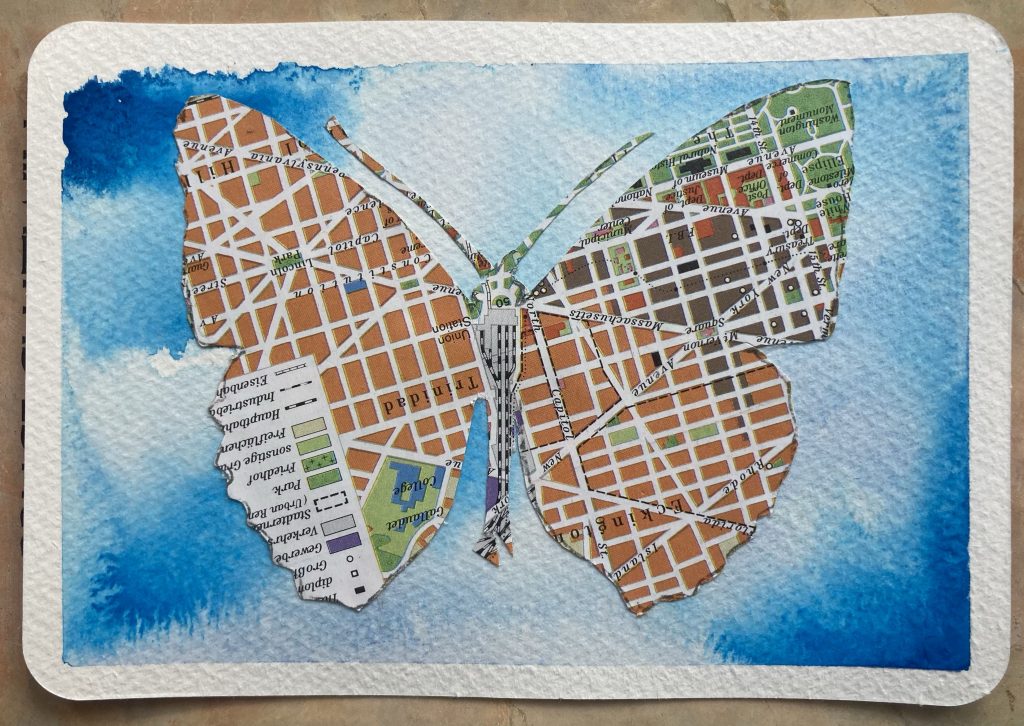
Postcard for or the Dreamland-Traumland exhibition curated by Lutz Anders at KunstRaum Reuter in Berlin.
Entry for a Mail Art open call 2024.

Visual Artist
Postcard for or the Dreamland-Traumland exhibition curated by Lutz Anders at KunstRaum Reuter in Berlin.
Entry for a Mail Art open call 2024.
Interactive installation for the Fremdkörper group show at the Kiezkapelle, Neukölln.
1-3 December 2023
The Kiezkapelle and surrounding cemetery are places where life and death coexist. The skull, the hourglass and the mirror have traditionally been used in art as symbols of transience and mortality.
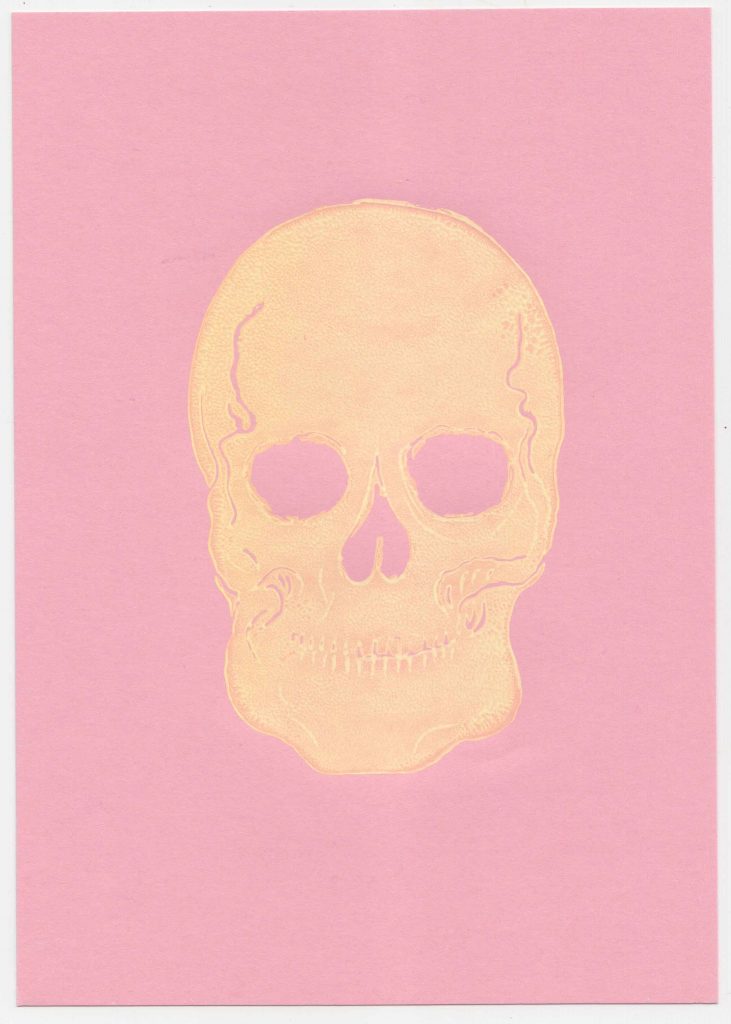
Memento Mori offered a chance to interact with these symbols for a short while. Visitors were invited to select a linocut skull print and draw a self portrait over it using felt tip pens. Participants were asked to add their picture to the display.
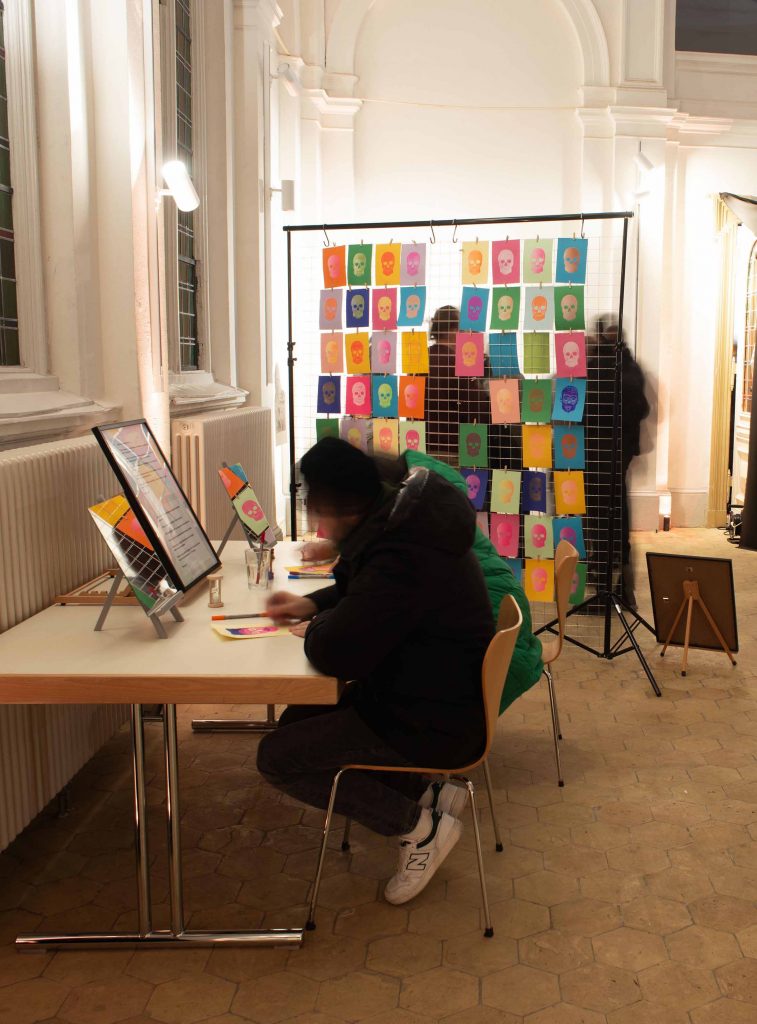
The printed instructions :
Memento Mori
To take part in this workshop experience, here are the guidelines:
Select a print and take it to the drawing table.
Sit down opposite a mirror and choose two or three coloured pens to draw with.
Get ready to draw your self portrait over the image of the skull.
Please do the drawing within the time limit allowed by the hourglass ( it will be either 3 or 5 minutes).
Please add your work to the display.
Thank you !
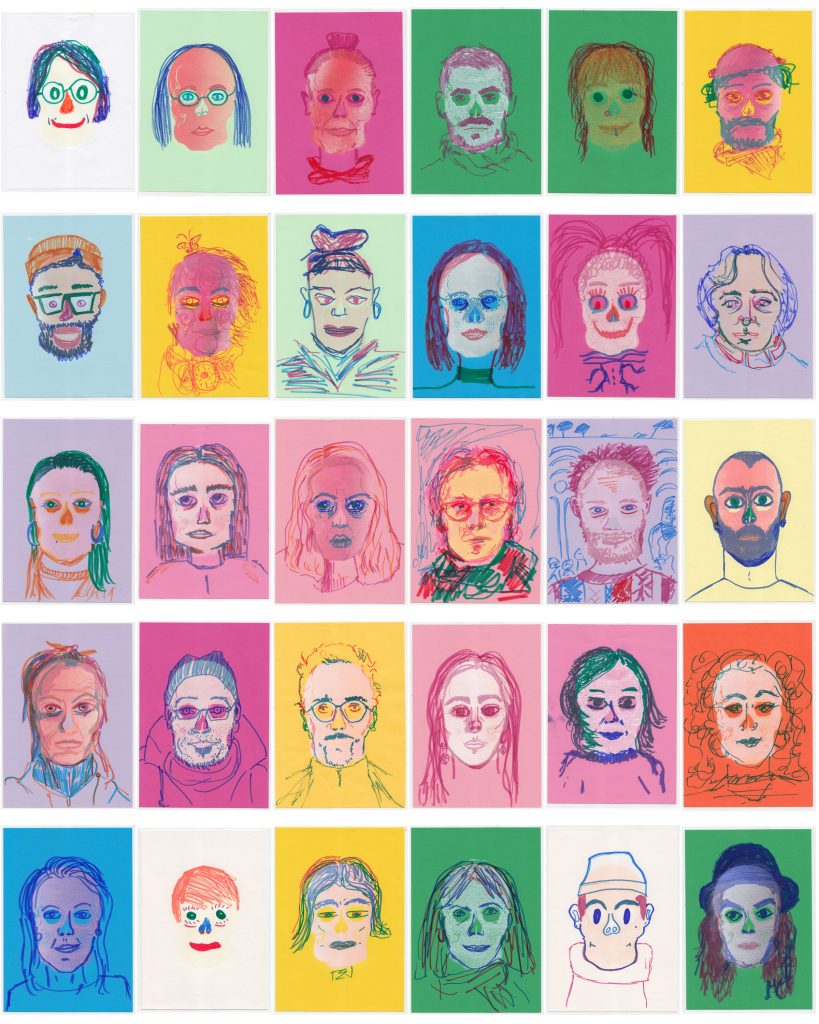
Over the three days the exhibition ran, 132 people contributed their self portrait to the exhibition. Here are some of them:
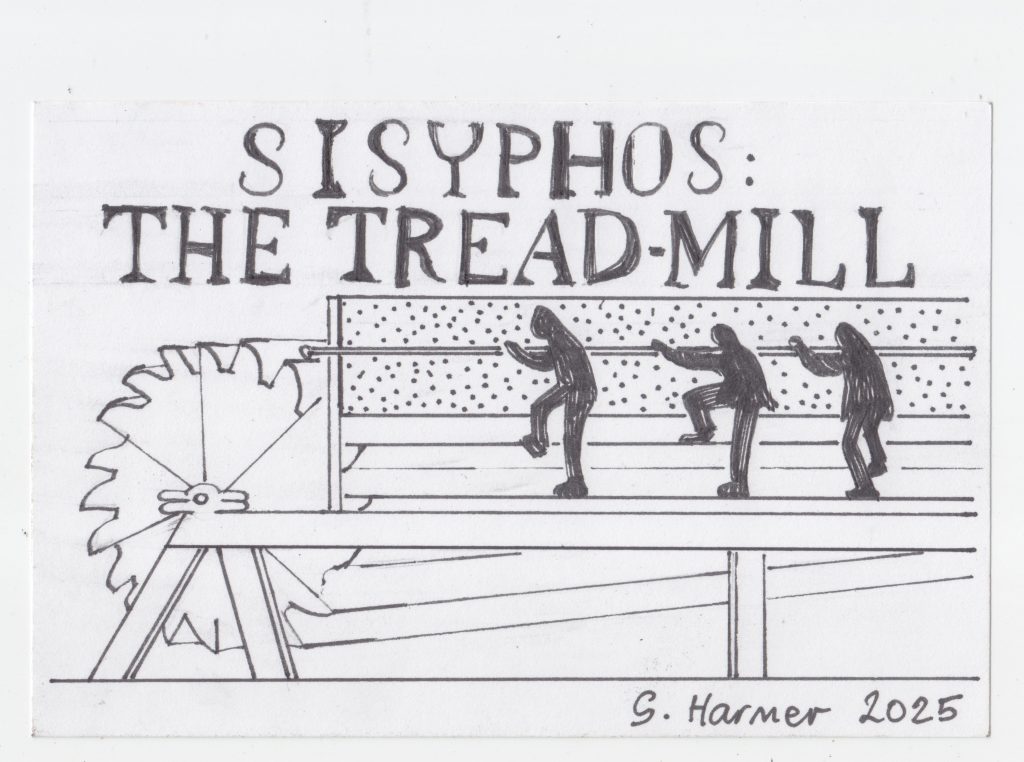
Pen and ink drawing (A6 format). Made for the Mail Art open call from the Sisyphos Gesellschaft.
The theme was Sisyphos (EN: Sisyphus). The drawing depicts the kind of treadmill that was used in British prisons in the 19th century.
Shown at the exhibition in Weltkulturerbe-Raum, Bruno-Taut-Siedlung , Berlin in February 2026.
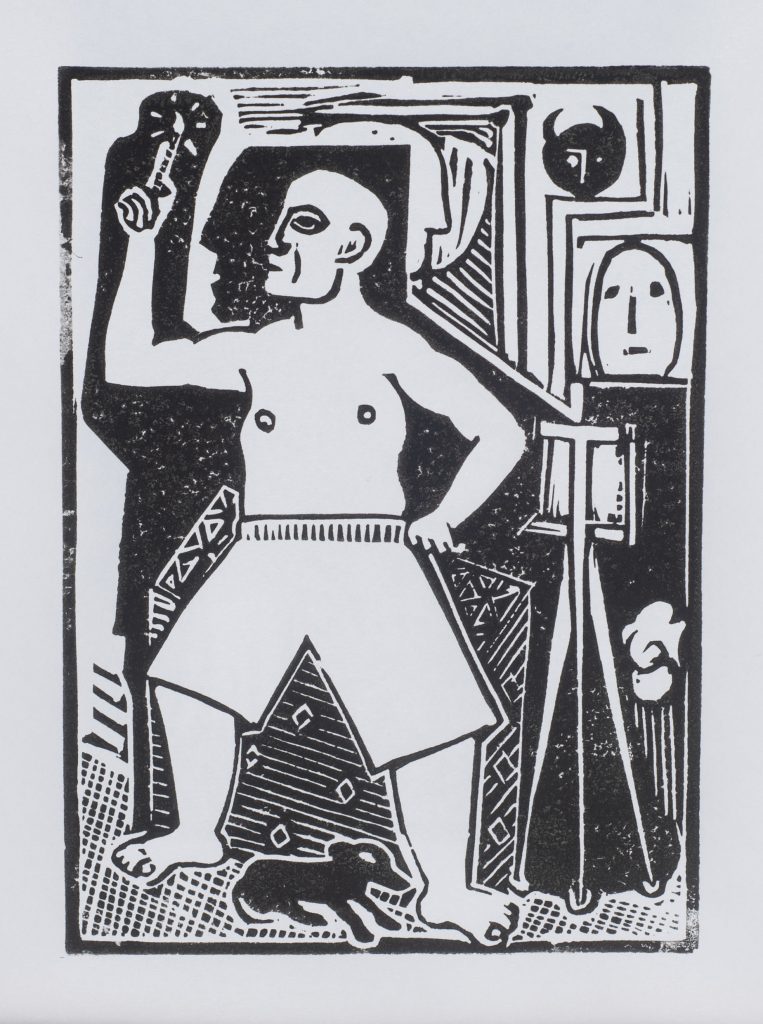
Linocut (A5 format). Made for the Mail Art open call curated by Lutz Anders.
Shown at the exhibition in KunstRaum Reuter, Reuterstrasse, Berlin. Autumn 2023.
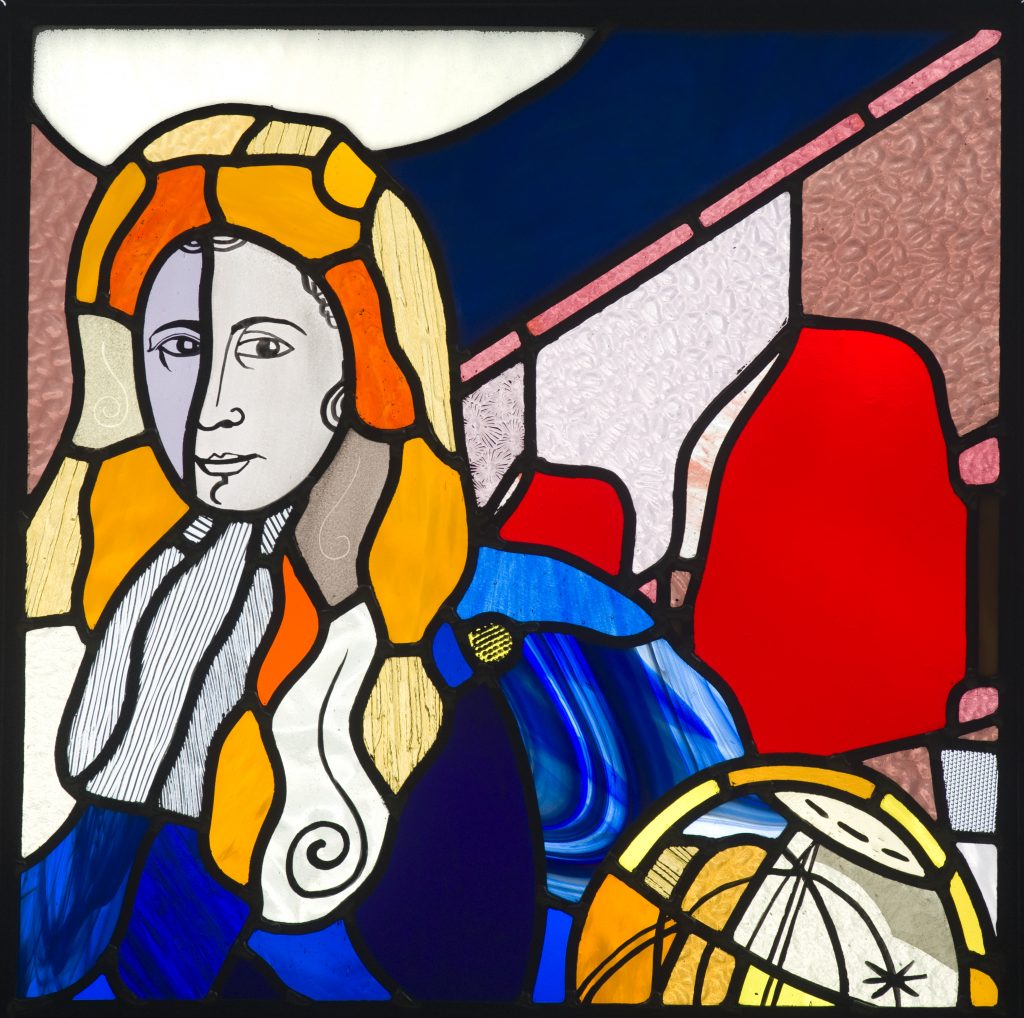
Beispielpanel für Wettbewerbsbeiträge. 465mm x 465mm
Stevens Competition 2020, The Worshipful Company of Glaziers.
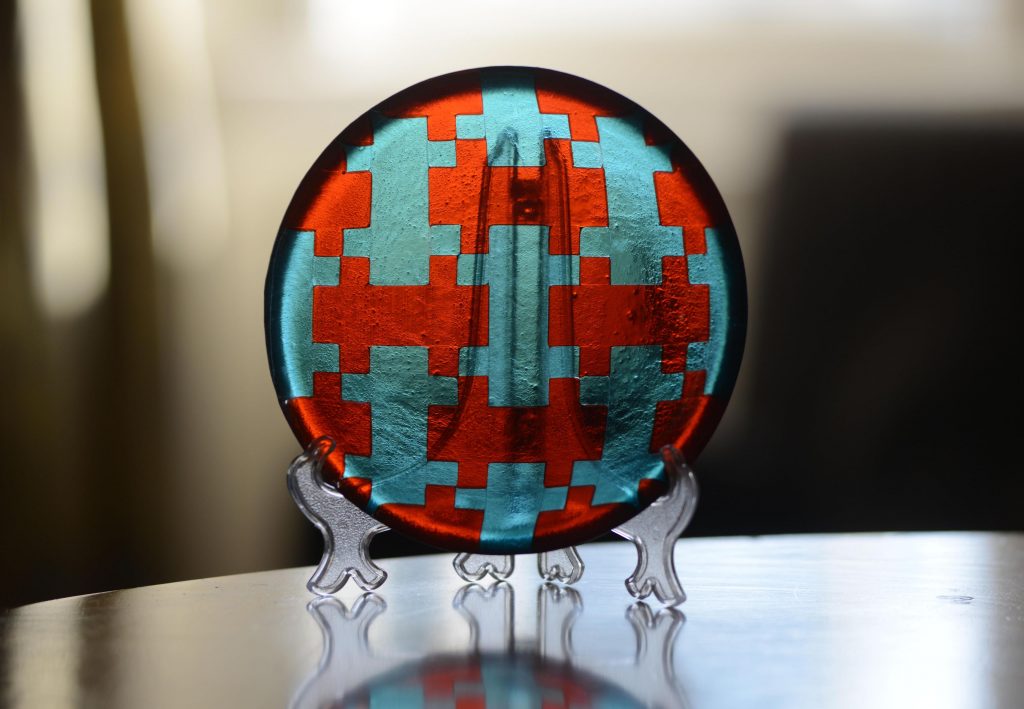
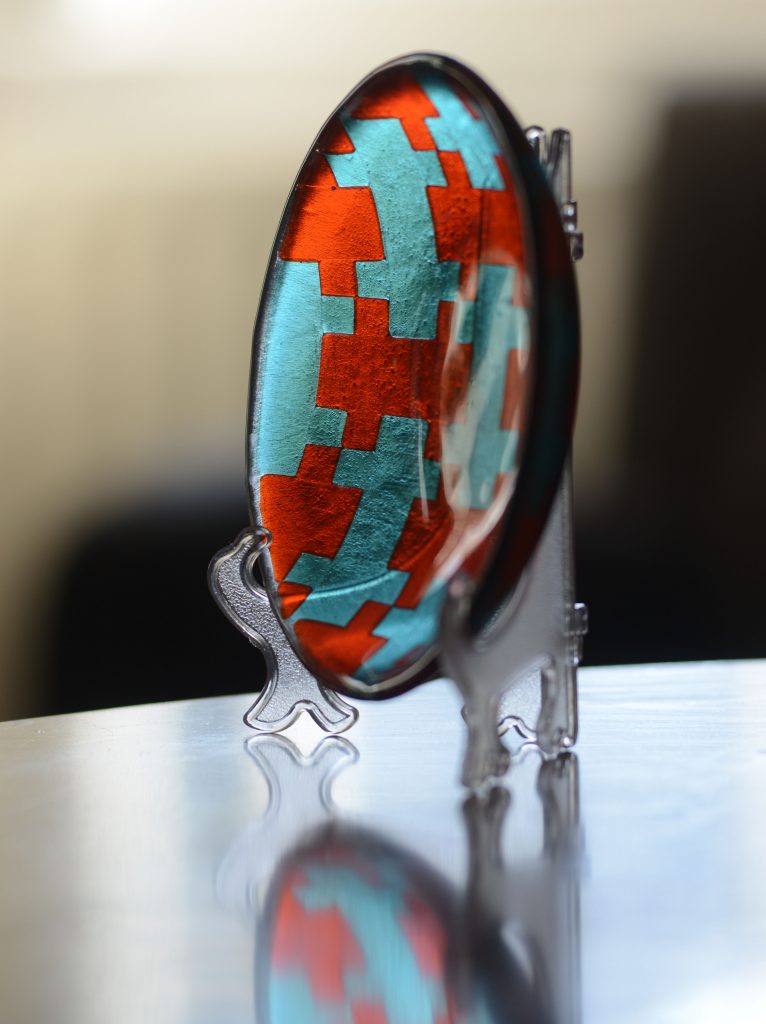
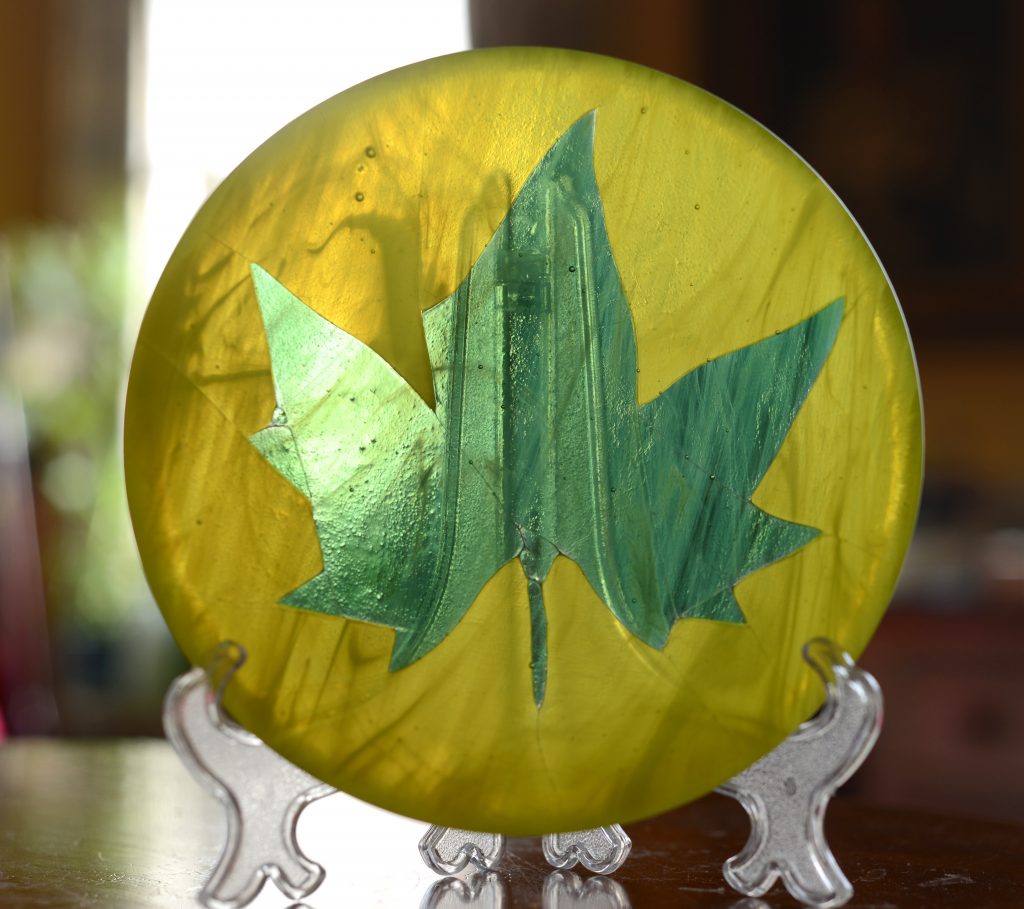
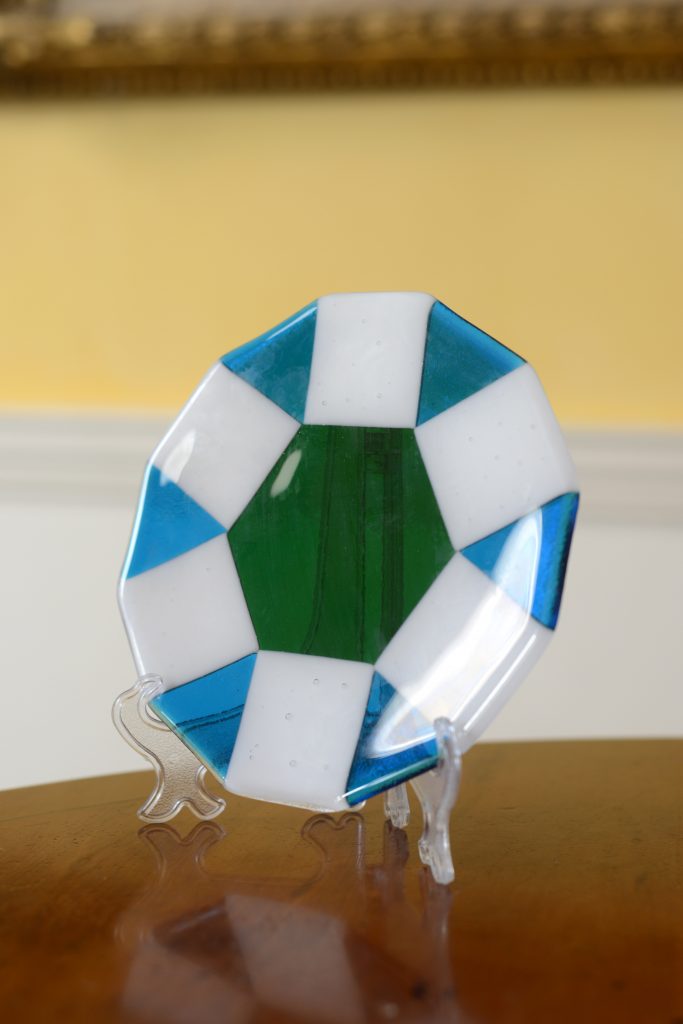
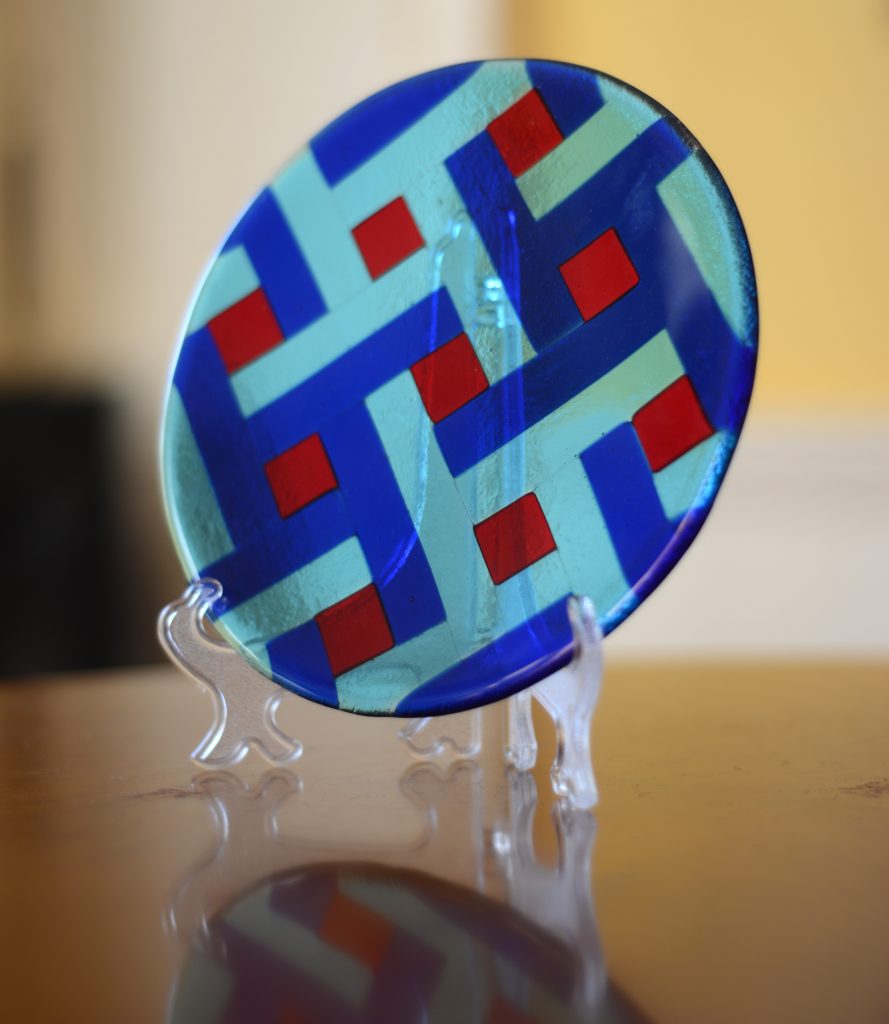
Inspired by the natural world and the ancient world, I create these pieces as one-offs or in limited runs.
Many of my designs are based on ancient patterns, like those documented by researcher Flinders Petrie.
There is an interesting tension between the linear nature of the designs and the globular, liquid nature of fused glass.
Essentially, these are mosaics which have been fused together to form one piece.
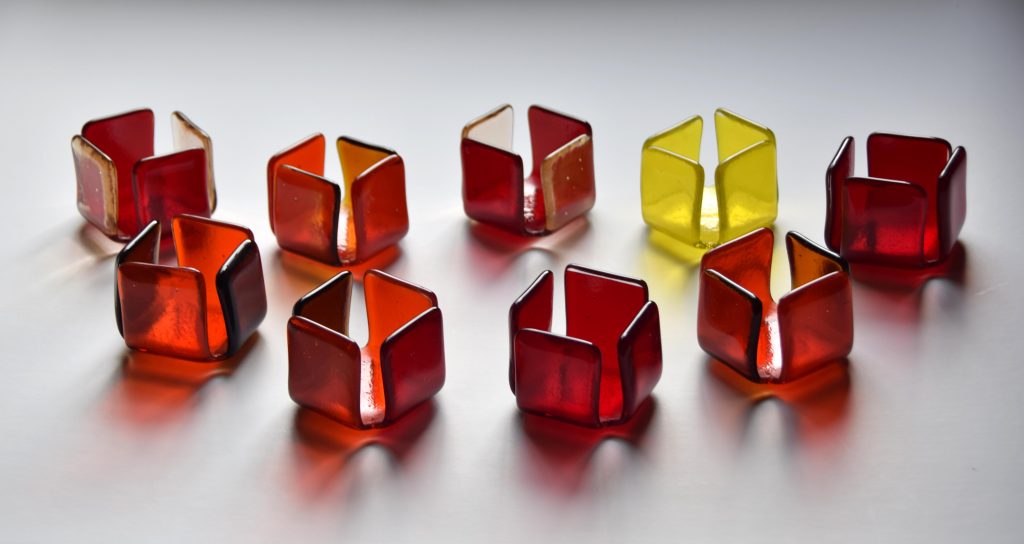
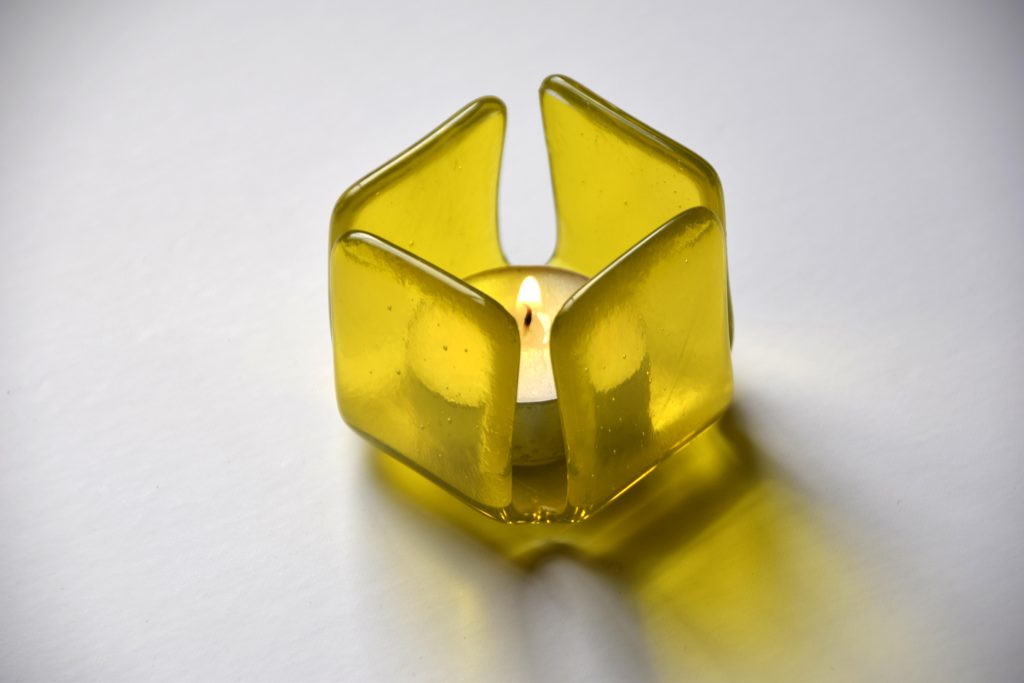
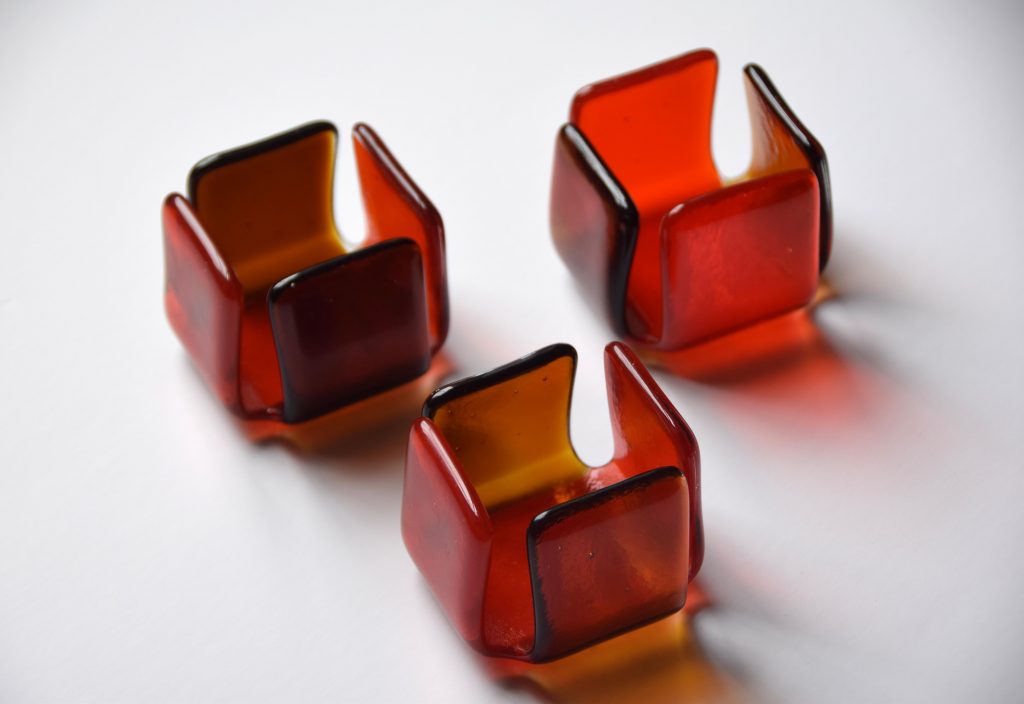
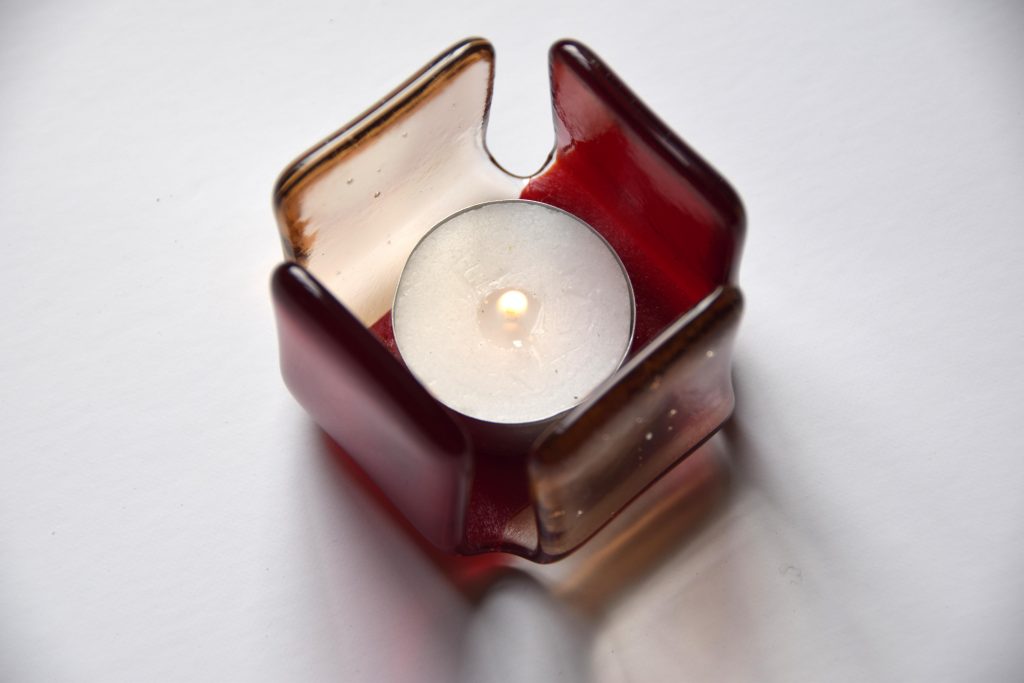
Tealight candle holders. These are created in the kiln by fusing and slumping hand-cut glass blanks, in a variety of colourways, either single colours or multicolour.
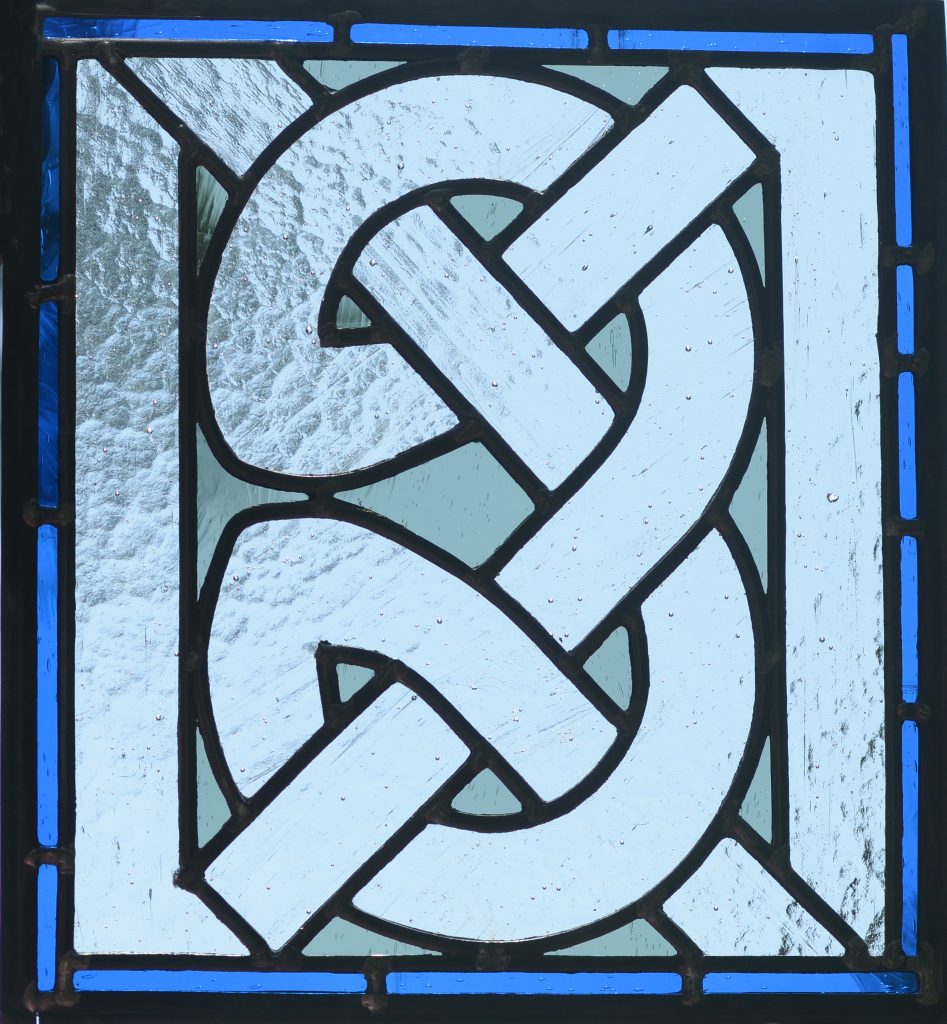
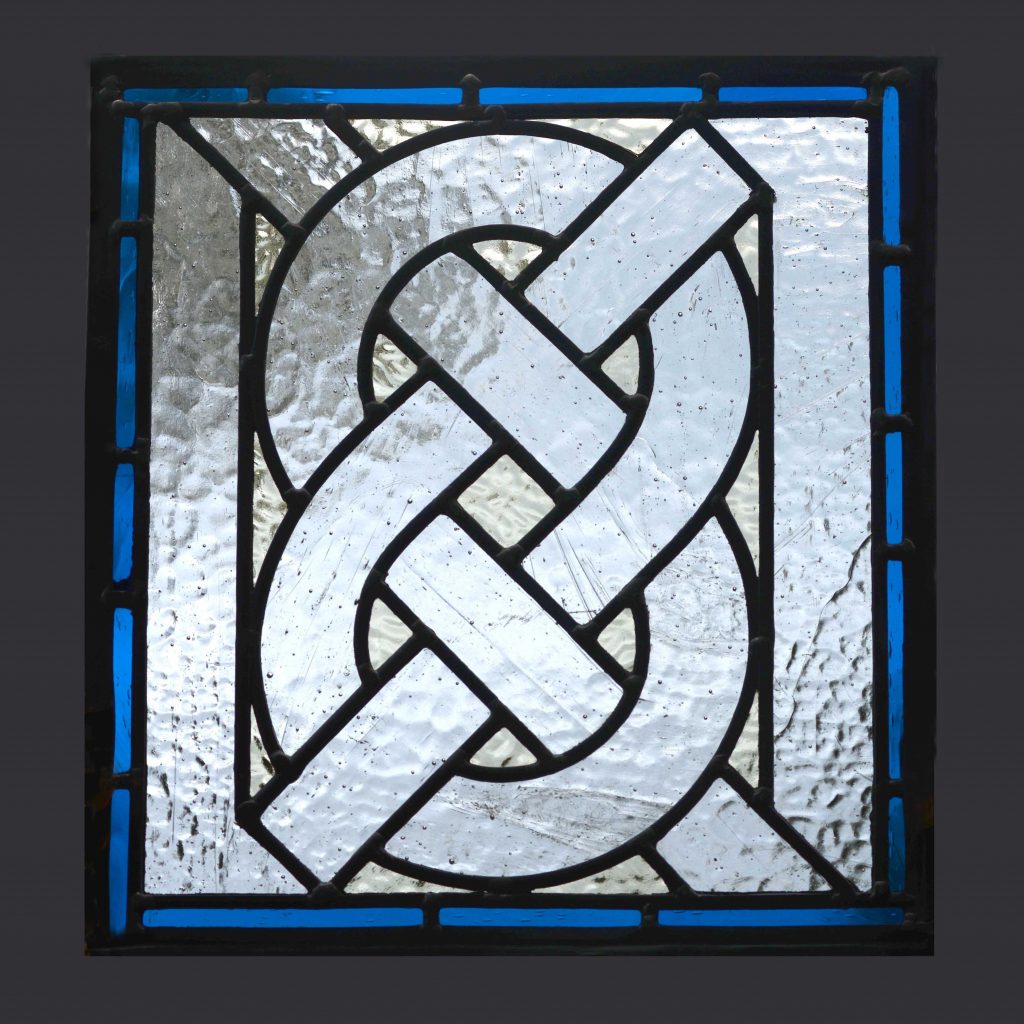
Experimental panels, made in 2019. Each panel is 12 x 13 inches.
Inspired by a study of George Bain’s book ‘Celtic Art : The Methods of Construction’.
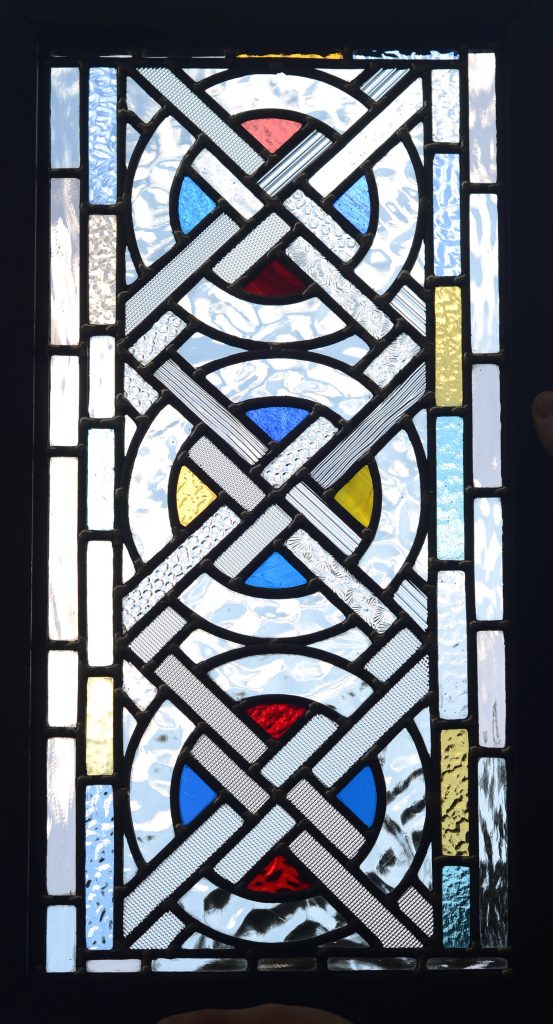
Leaded panel measuring 28cm x 56cm.
It is based on a 13th century panel I saw at the Stained Glass Museum in Ely – click here for a link to the original.
My panel includes a selection of textured clear glasses, some of which is reclaimed glass.
Using a varied selection of textured clear glass is a good way to create visual interest without darkening the room.
Especially in the lower third cross, there is a lot of stippled, pin-head style glass from the 1970s-80s, which apparently was popular in office interiors, to divide up open plan areas.
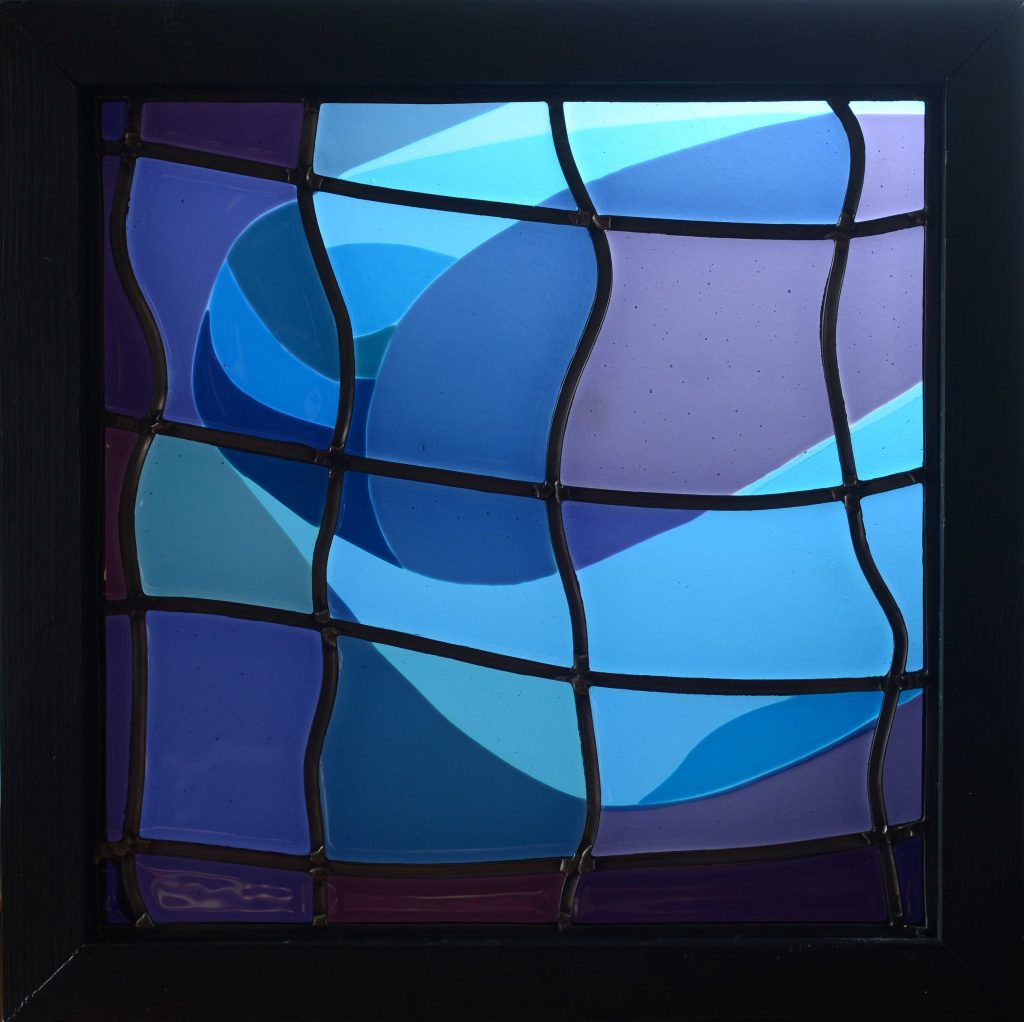
The design was entered into the Stevens Award 2019, organised by the Worshipful Company of Glaziers. The brief was to design a panel 1000 cm x 1500 cm suitable for an LED lightbox for installation in an underground proton beam therapy waiting area at UCLH in London.
This is the finished sample panel (45cm x 45cm) showing a section of the proposed work.
The design is made up of fused tiles which have been leaded together, depicting a mobius strip.